
CBCT Scans
CBCT scans generate high-resolution, three-dimensional volumetric images, facilitating enhanced analysis of bone structures and dental/tooth orientation. This technology is invaluable in dental implant planning, orthodontics, and maxillofacial surgery. While the accuracy of CBCT scans rivals that of medical CT scans, they employ a significantly lower radiation dose. The procedure is patient-friendly, allowing individuals to either stand or sit during the quick scan, which takes less than one minute.
Comparison with Traditional Dental X-Rays
Unlike conventional dental X-rays that capture flat, 2D images of limited areas, CBCT scans offer a comprehensive 3D perspective. This enables dental professionals to plan treatments with greater precision. Additionally, CBCT images are digitally stored, ensuring easy future access and the ability to share with colleagues or patients, pending consent.
CBCT scans are versatile, offering numerous advantages across various dental fields:
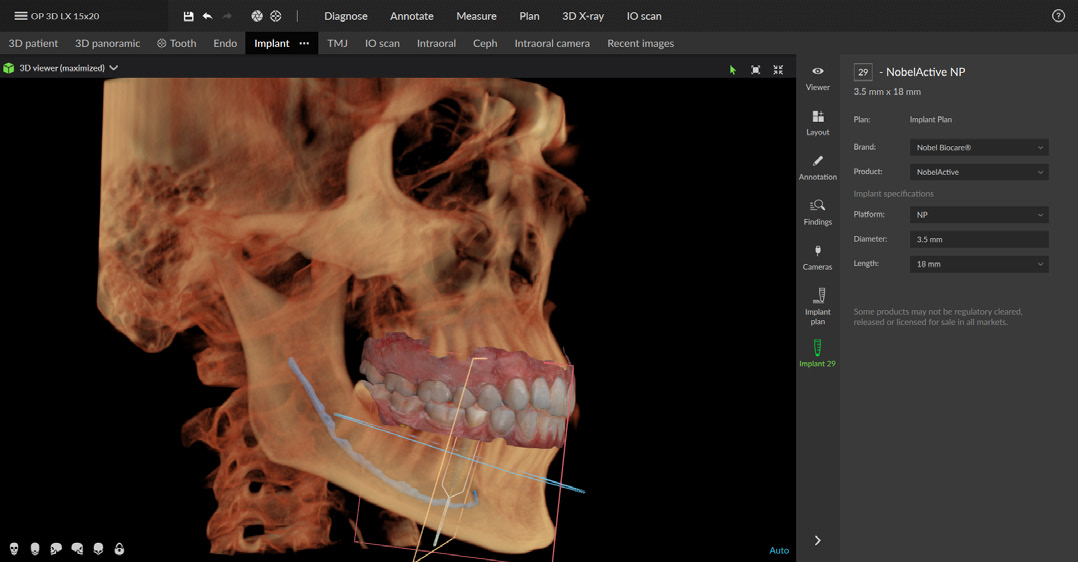
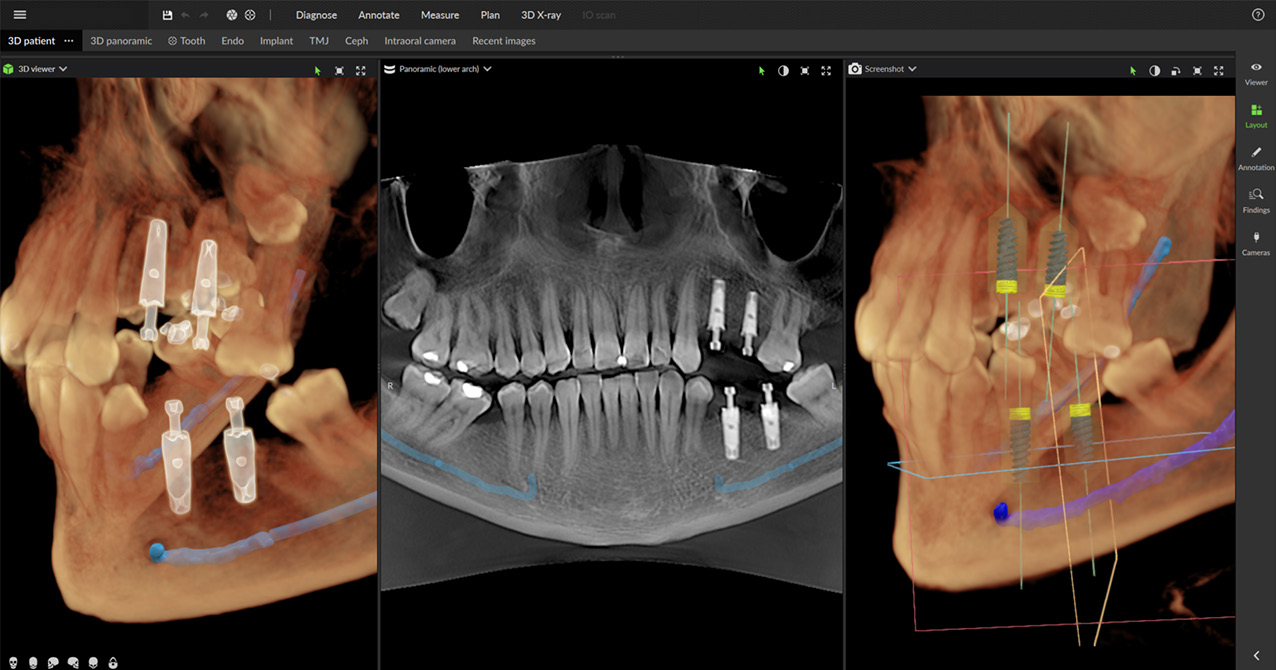
- Dental Implants: The superior quality of CBCT images enhances the accuracy of implant planning and placement, spanning diagnosis, treatment, and post-operative care.
- Orthodontics: In orthodontics, CBCT provides clear images essential for precise dental brace placement and aids in assessing dental asymmetry and tooth relationships.
- Temporomandibular Joint (TMJ): TMJ CBCT scans are cost-effective and enable thorough TMJ analysis, diagnosing conditions with clear images of joint spacing and dysfunctions.
- Impacted Teeth: CBCT scans can detect impacted teeth and ascertain their exact position relative to adjacent teeth, nerve canals, sinus walls, and cortical borders.
- Prosthodontics: CBCT data can be combined with digital impressions and planning software, streamlining the design and fabrication of crowns, bridges, and full-arch prostheses for a more predictable outcome.
- Airway Assessment: CBCT scans of the airway can reveal potential issues, aiding dentists in revising treatment plans if necessary.
- Comprehensive Analysis: CBCT analysis enables detection and evaluation of potential patient issues, such as bone lesions, jaw deformities, cysts, tumors, and diseases.

Orthodontics
Prosthodontics
Implants